Baby Formula Guide: Types, Labels, and Safe Prep
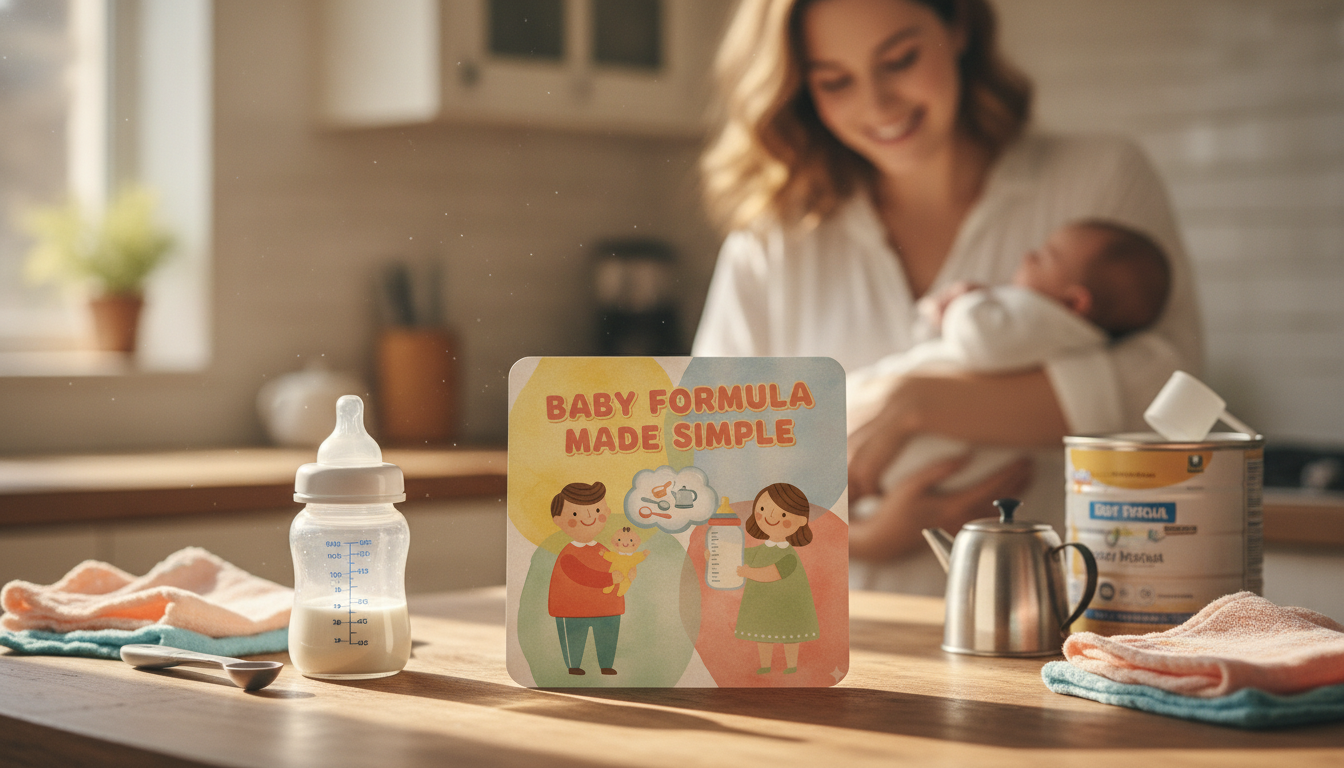
Choosing a baby formula can feel overwhelming when labels, ingredients, and baby needs don’t seem to match up neatly. This guide breaks down the main formula types, how to read the can, when to consider specialty options, and how to prepare and store formula safely—so feeding decisions feel straightforward for parents, beginners, and anyone helping with bottles.
What this guide helps you decide (fast)
- How to narrow choices by baby’s age, feeding plan (exclusive formula or combo feeding), and any symptoms.
- Which differences matter most (type, protein, carbs, additives) versus what is mostly marketing language.
- When to stay the course versus when to talk to a pediatrician before switching.
- How a simple checklist can keep decisions consistent across parents, babysitters, and caregivers.
The main types of baby formula
Most infants do well on standard formulas that meet U.S. nutrition requirements. Specialty options can be helpful, but they’re most effective when the reason for switching is clear (for example, a suspected allergy versus everyday gas).
- Cow’s milk–based formulas: The most common starting point for many babies.
- Partially hydrolyzed formulas: Proteins are broken down somewhat; may be gentler for some babies but not a treatment for true milk allergy.
- Extensively hydrolyzed formulas: Proteins are broken down significantly; often used under medical guidance for allergy or significant intolerance concerns.
- Amino acid–based formulas: Designed for specific medical needs; typically guided by a clinician.
- Soy-based formulas: Sometimes used for specific situations; discuss with a pediatrician if considering due to medical or tolerance reasons.
- Goat milk–based formulas (where available): Can be an option for some families; still not appropriate for confirmed cow’s-milk-protein allergy.
Quick comparison: formula types and typical reasons families consider them
| Formula type | Common starting point? | Why families consider it | When to get medical advice first |
|---|---|---|---|
| Cow’s milk–based | Yes | Widely used; designed to meet infant nutrition standards | If baby has persistent blood in stool, poor growth, or severe eczema |
| Partially hydrolyzed | Sometimes | May be easier to digest for some babies | If symptoms suggest allergy (hives, wheeze, bloody stool) |
| Extensively hydrolyzed | No | Often used for suspected milk protein allergy or significant intolerance | Usually recommended with pediatric guidance |
| Amino acid–based | No | For complex allergy or malabsorption cases | Yes—medical supervision recommended |
| Soy-based | Sometimes | Alternative in certain scenarios | If preterm, or if allergy/tolerance questions are present |
How to read a formula label without getting lost
- Age range and stage: Choose formula intended for your baby’s age group. Avoid non-infant products unless specifically advised by a clinician.
- Protein source and processing: Look for milk-based proteins (often whey/casein), hydrolyzed protein notes, or soy protein isolate.
- Carbohydrates: Many formulas use lactose; others may use corn syrup solids or glucose polymers. If baby has a special medical need, discuss carb changes with a pediatrician.
- Fats and DHA/ARA: Common across many brands. Rather than chasing one add-on, prioritize overall fit and tolerance.
- Iron: Iron-fortified formula is commonly recommended. If there’s a medical exception, confirm it with the pediatrician.
- Allergen statements and specialty claims: “Gentle” can be marketing; terms like “hydrolyzed” or “hypoallergenic” are more specific. When in doubt, ask your pediatrician what label language actually matches the goal.
A practical decision path for choosing the right formula
- Start with baseline: Full-term vs. preterm, current weight gain, and any diagnoses already on record.
- Write down symptoms (if any): Spit-up, gas, constipation, diarrhea, rash/eczema, blood in stool, persistent fussiness after feeds.
- Spot urgent issues: Trouble breathing, poor feeding, dehydration signs, or blood in stool calls for prompt medical contact.
- If baby is generally thriving: Consistency often wins. Frequent switching can create new variables without fixing the original concern.
- If trying a change: Adjust one variable at a time (type or brand, not everything at once). Give a reasonable observation window unless symptoms are severe.
- Coordinate with all caregivers: Same mixing instructions, same bottle plan, and the same approach to missed feeds and spit-up.
Special situations: when “regular” formula might not be the best fit
Safe preparation, storage, and feeding basics caregivers can follow
For the most up-to-date safety details, refer to the CDC guidance on formula preparation and storage, the FDA’s infant formula consumer information, and the American Academy of Pediatrics resources.
Making it easier: a printable checklist for consistent feeding decisions
Digital download: Baby Formula Made Simple
If you want a single reference that’s easy to share between parents, grandparents, and babysitters, the Baby Formula Made Simple digital download organizes formula choices using straightforward criteria (baby needs, label basics, and safe prep routines). Keep it on a phone or print key pages for the kitchen and diaper bag.
Long bottle-prep sessions can also be hard on a caregiver’s back and shoulders. For at-home comfort between feeds, consider the Ultimate Back Magic Stretch & Massage Device to support gentle stretching during downtime.
FAQ
How do you know if a baby needs a different formula?
Look at overall growth, hydration (wet diapers), and comfort. Contact a pediatrician before switching if there’s blood in stool, hives, wheezing, poor weight gain, or severe eczema.
Is it safe to switch baby formula brands or types?
Many babies tolerate a change, but frequent switches can make it hard to know what helped. Change one variable at a time, mix exactly as directed, and get medical guidance if allergy signs or significant symptoms are present.
What’s the safest way to prepare and store formula?
Use clean equipment, measure precisely, follow label directions for water and storage limits, refrigerate prepared formula promptly, and discard bottles left out too long. Warm bottles without a microwave and test temperature before feeding.












Leave a comment